A 6-Month Plan to Leave Your 9–5

In September of 2018, I questioned everything.
I’d just graduated with an economics degree and was working as a prison officer. I hated every second.
After quitting, I started a business (which failed), cleaned toilets for 3 months, was rejected by companies in London, and then stumbled into SEO. This is the industry I’ve been working in for the last two years.
Now don't get me wrong — I enjoy my work and the people I work with. The problem is, I’m bored, and I feel like I’m drifting.
Luckily, I’ve had the pleasure of interviewing many talented entrepreneurs to know there are different ways to leave a 9–5.
One is to dive into your own thing head-first and learn on the fly. Personally, I haven’t got the stomach for this. The other is to build an income on the side.
Bingo!
Once you’ve made your choice, what’s next?
Your 6-Month Plan
Last November, I was pointed to a free course. I gave it a whirl and have been recommending it ever since.
One of the lessons is to attend Google University. The course creator believes if you want to learn a new skill, Google can teach you how.
Another lesson is to write a 6-month plan based on goals you’d like to achieve. The plan should give details of steps to take, and what you need to complete every month.
The course recommended a Google Doc for writing your 6-month plan. This way, after referring to it a few times, you’ll just need to press the “6” key in your browser’s search bar for it to be suggested.
Here’s a link to my plan if you’d like to check it out.
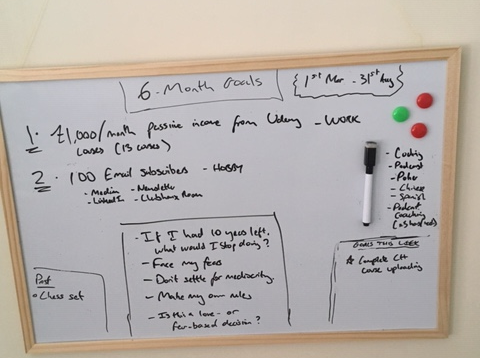
My mum also bought me a whiteboard. It hangs in my flat as a reminder of my goals.

Passive Income Is Not a Myth
Since taking the course, I’m clearer on my goals. I’ve also made money through writing and Udemy. Best of all? These income streams are passive.
Now some people will say this is unrealistic; that passive income is a myth. You can’t make money in your sleep.
I know that’s not true.
You see, one of the beautiful things about interviewing entrepreneurs is you can learn how they make money. One such example is Louise Croft. She’s a digital nomad who makes over $17,000 a month passive income from Udemy courses.
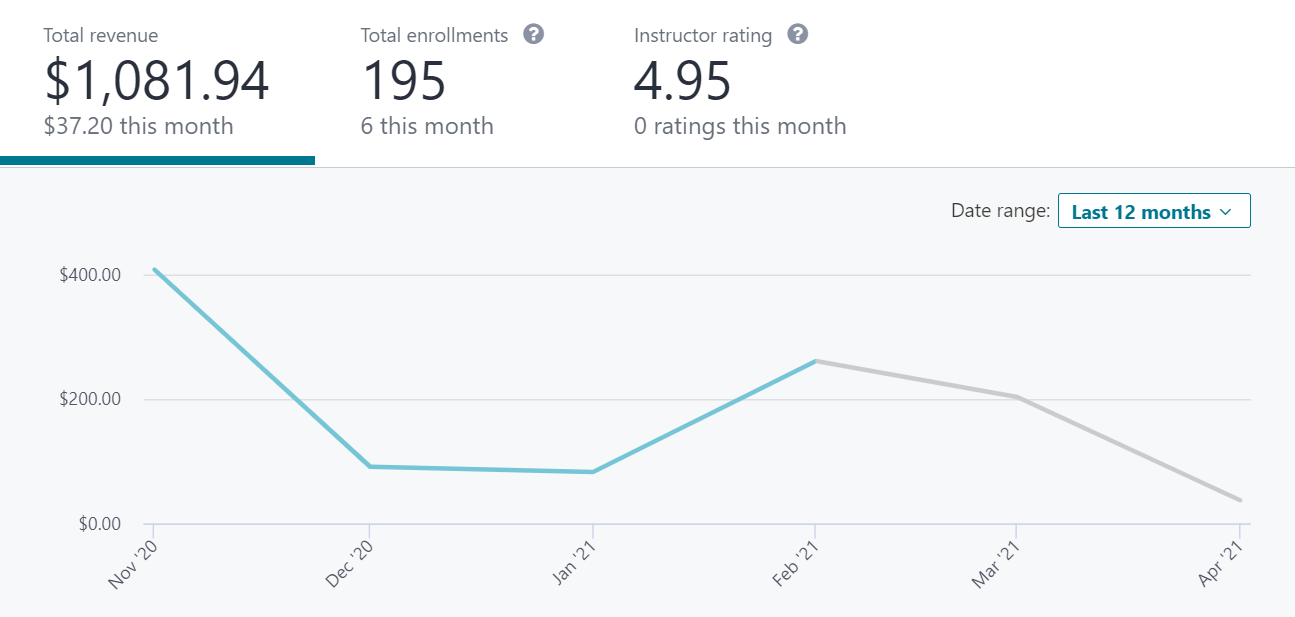
I launched my first Udemy course last November and it made $305.13 in 12 days. Since then, I’ve launched two more, and total revenue stands at $1,081.94.

With this in mind, here’s how I’m planning to leave my 9–5 in 6 months by creating passive income streams, and how you could do it too.
Current Income Streams Outside My 9–5
Udemy Courses
My aim is to make £1,000 a month from Udemy courses before September 2021. This will cover my living expenses.
Based on the current trends, I’m confident each of my courses can bring in $100 a month. This means I’ll need to create 11 more courses to make $1,400 (i.e. £1,000).
Here’s a comprehensive breakdown of how to make a successful Udemy course based on a podcast I recorded with one of Udemy’s highest-earning instructors.
Email List
This has been a surprising success so far. I started it on March 18th and 36 people have subscribed to date.

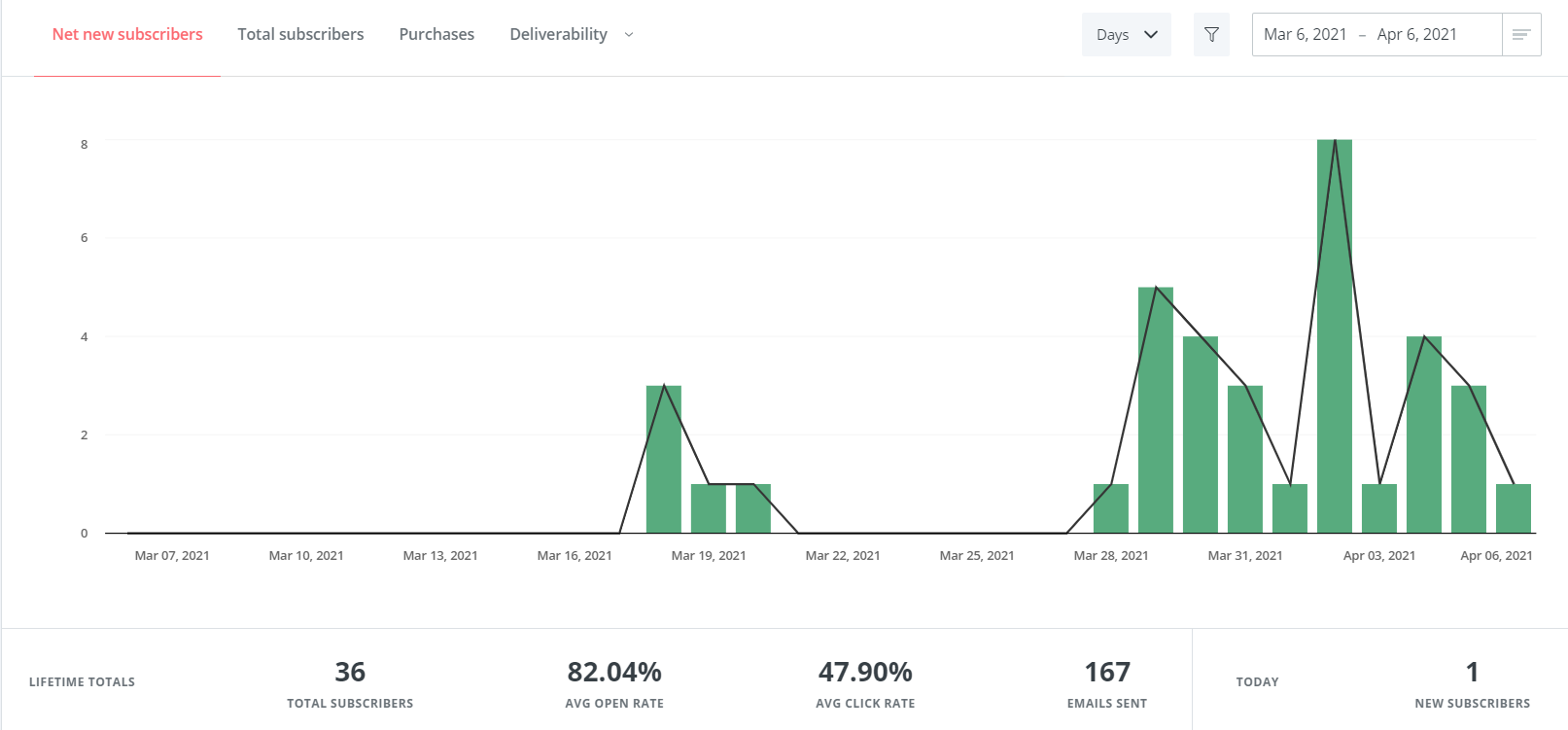
I have two separate landing pages. One is scottstockdale.co.uk/outsource where people can sign up for my free 5-day outsourcing course. The other is scottstockdale.co.uk/writing, and people can get my free 14-page Google Doc about becoming a full-time writer.
I’m bringing value to these two segments — outsourcing and writing — by sending one email a week to each.
I’ll also promote my Udemy courses where appropriate. Otherwise, I have no plans to sell to my list. My aim is to keep providing value, keep growing it, and let the “trickle-down effects” unfold.
Speaking of which…
Trickle-Down Effects
This is a term coined by my mentor, Alex Chisnall. It means deliberately leaving money on the table in the knowledge that if you keep providing value, opportunities will come your way.
I’ve seen this play out for Alex.
He started Screw It Just Do It in 2017, and he’s published two episodes every single week. Over time, he’s built an influential network and helps brands all around the world with their podcasts.
He spotted a similar opportunity on Clubhouse. He now co-runs over ten rooms a week and has amassed close to 12K followers in three months. His consistency on the app has also landed him a four-figure-a-month sponsorship deal.
I’ve personally seen trickle-down effects play out too. Through my podcast, I developed a connection with Alex, and he realised I could help him with his agency. I’m now getting paid to coach a number of his podcasting clients.
Other trickle-down effects include one-off SEO projects and consulting calls, and I’ll soon be delivering a paid masterclass about creating Udemy courses for one of my previous podcast guests.
All this is to say the trickle-down effects can be sizeable when you put in the work.
Key Takeaways
Last year, I had no clarity. I was taking on too many projects and was feeling overwhelmed.
I lacked focus.
It’s only in the last few months that I’ve become obsessed with pursuing my goals. To me, then, it’s no coincidence I’ve started seeing results.
It’s not all fun. In the evenings, I spend hours writing and creating courses. I also cram in podcast recordings during lunch breaks. From what I hear, though, this is what you have to do.
Sinem puts it beautifully:
“You can only work smart if you’ve done the hard work first.” — Sinem Günel
Seeing hard work pay off is super rewarding, though, and I like to remind myself of this quote by Malcolm Gladwell:
“These three things — autonomy, complexity, and a connection between effort and reward — are, most people agree, the three qualities that work has to have if it is to be satisfying.” — Malcolm Gladwell, Outliers
My parting thoughts?
6-month plans can make all the difference so I’d recommend writing down two goals you’d like to work on for the rest of this year. Next, attend Google University to figure out how to achieve them, and then make plans to work towards them every single day.
Oh, and if people tell you passive income is a lie, steer the course. It’s just not true! To date, I’ve made close to $3,000 from writing and Udemy courses alone, and I’m just getting started.
Comments
Post a Comment